
Meet Mr. Tanaka: 7th-Generation Potter of Ichinose Pottery
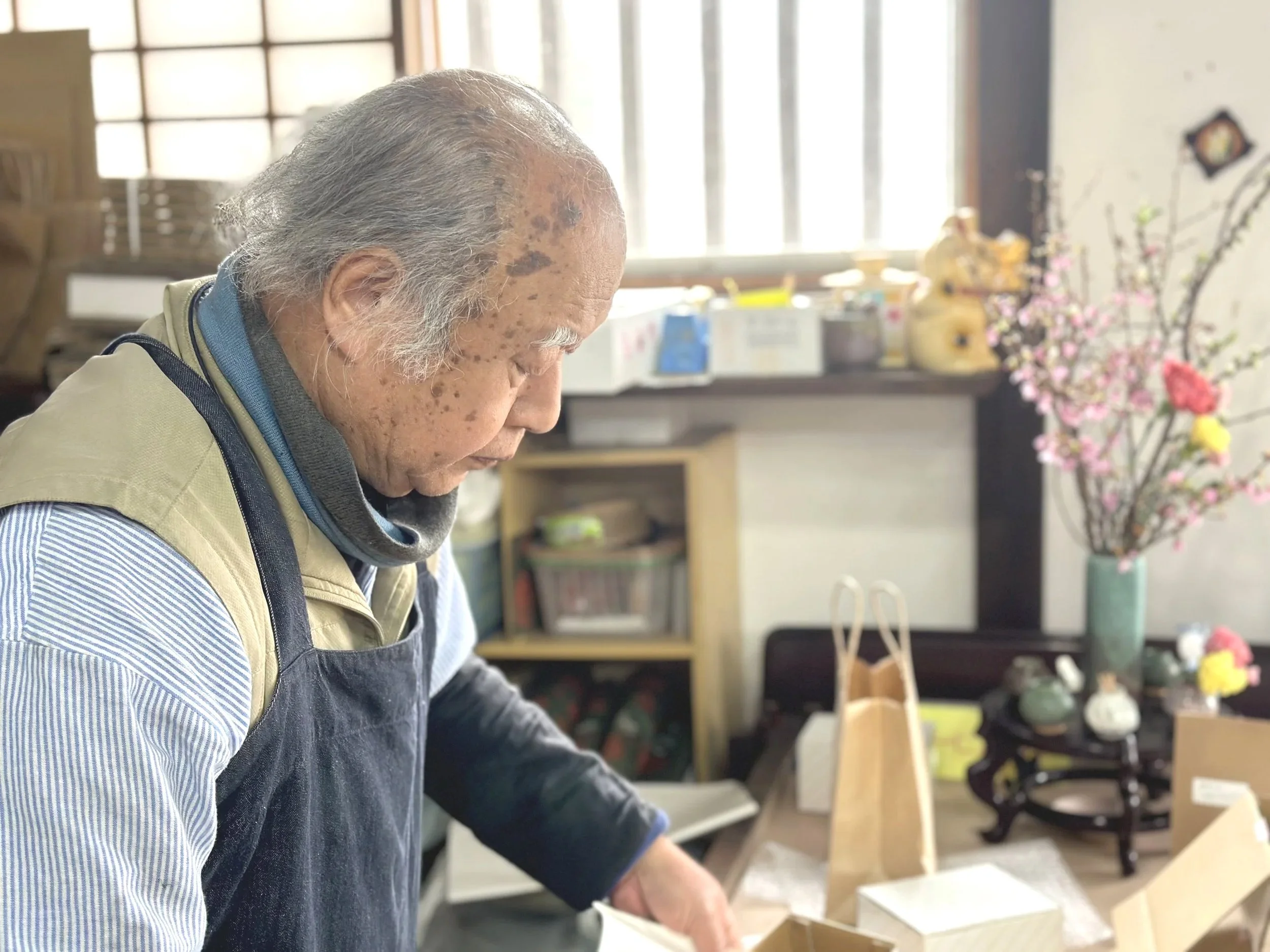
(Mr.Tanaka, the 7th generation potter in Ichinose tradition)
Hi all. It’s Haruka here.
Visiting Mr. Tanaka’s traditional pottery kiln is always one of the highlights of our retreat program. At 77 years old, with more than 50 years of experience, he continues to work with incredible passion and dedication. Our guests are often fascinated by his way of life, the beauty of his handmade pottery, and the amount of work that goes into every piece.
As the seventh generation of his family’s pottery tradition—and sadly, likely the last—meeting him offers a rare glimpse into a craft and way of life that has been passed down through generations.
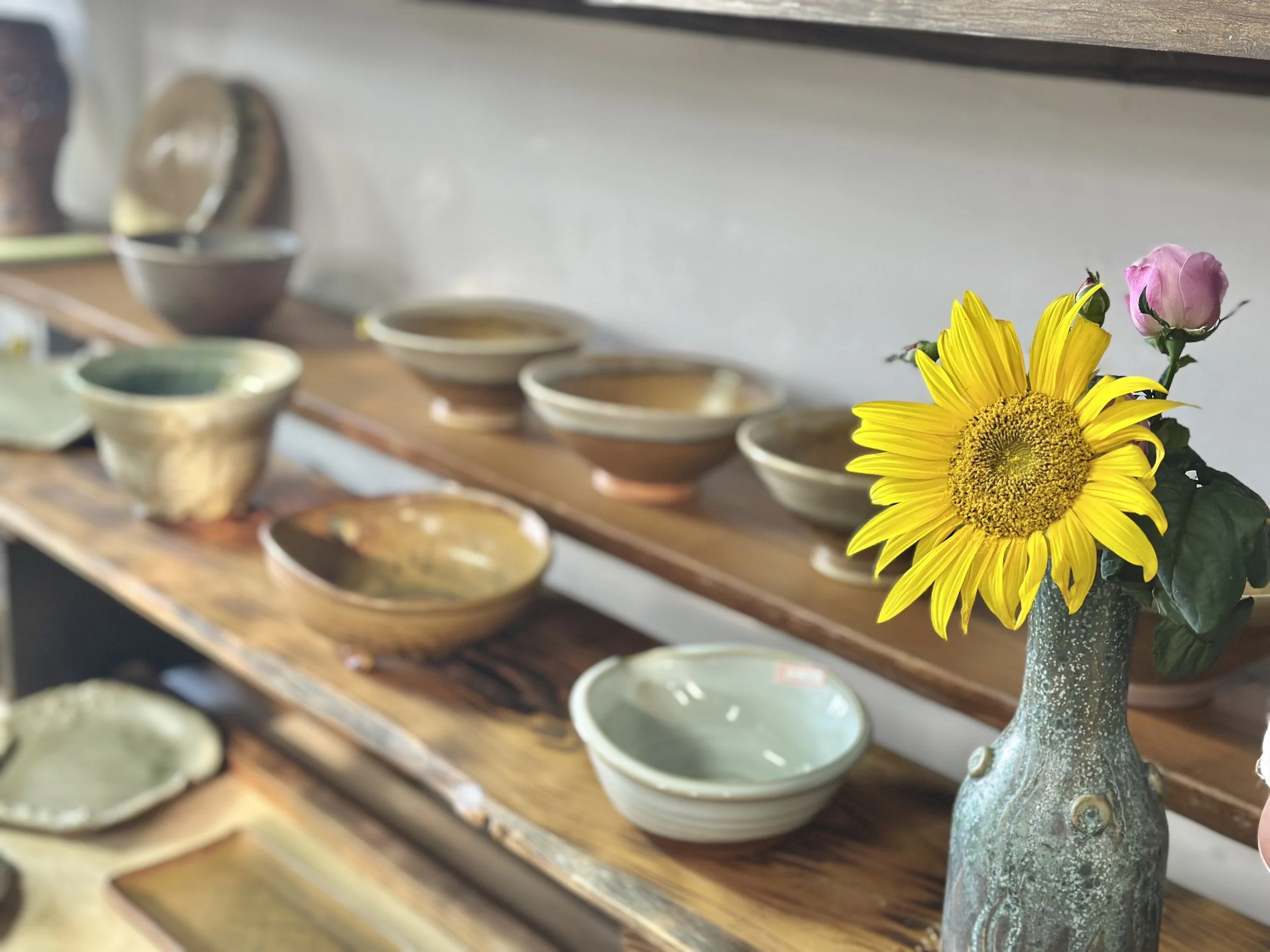
(His beautiful creations)
What makes Mr. Tanaka’s work particularly special is his commitment to traditional wood-fired pottery.
While many potters today use modern gas or electric kilns for greater convenience and control, he continues to fire his pieces with wood, just as generations before him did. It is a much more demanding and unpredictable process, but for Mr. Tanaka, this traditional way of firing is an essential part of his craft—and something he remains deeply passionate about.
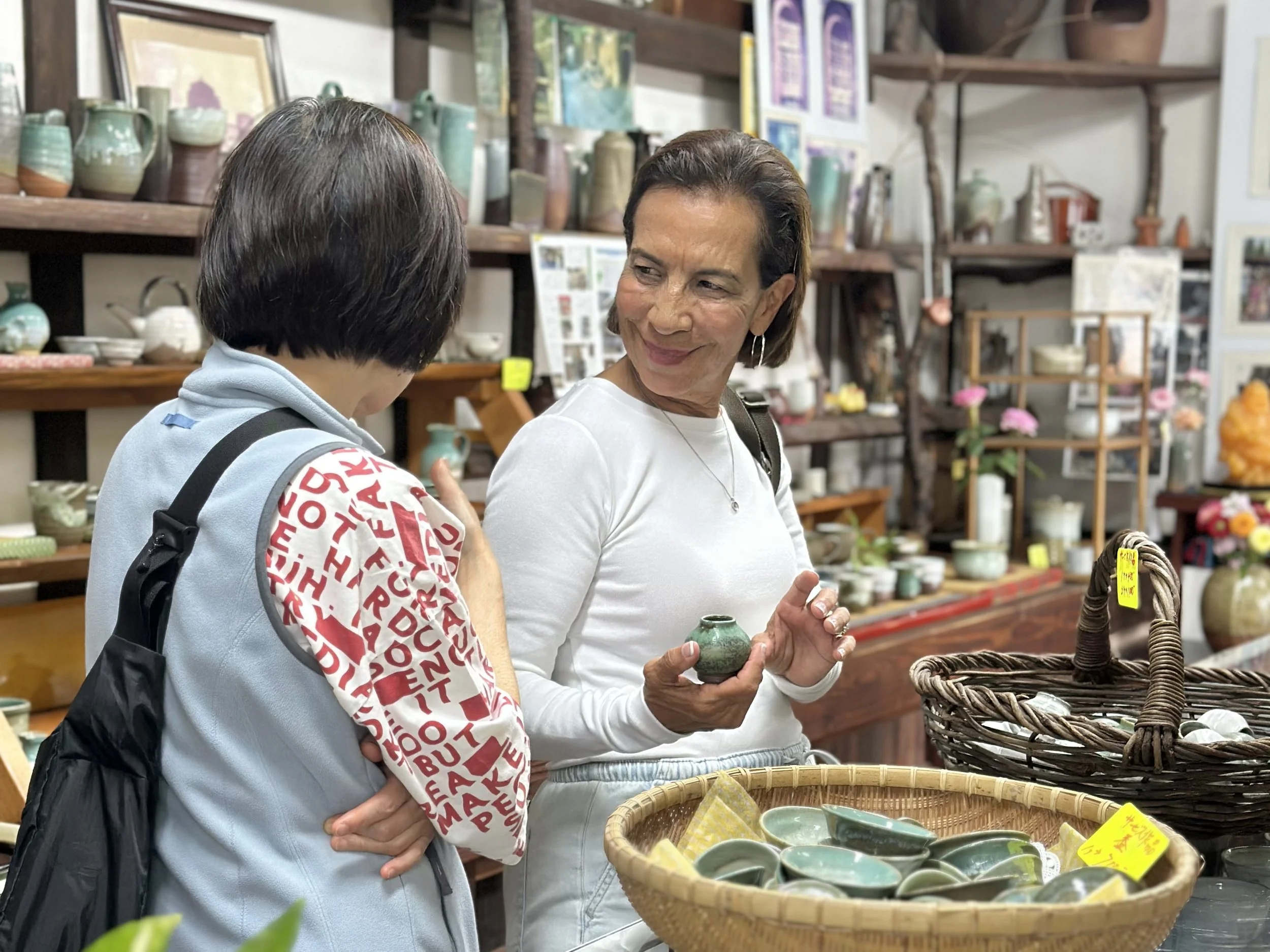
(Retreat guests browsing his work)
During our retreat, we have the privilege of visiting Mr. Tanaka at his pottery shop and stepping behind it to see the traditional wood-fired kiln where his pieces are created.
Seeing the kiln up close makes us appreciate his work on a completely different level—it’s one thing to admire the finished pottery, but another to stand beside the place where decades of skill, patience, and hard work come together.
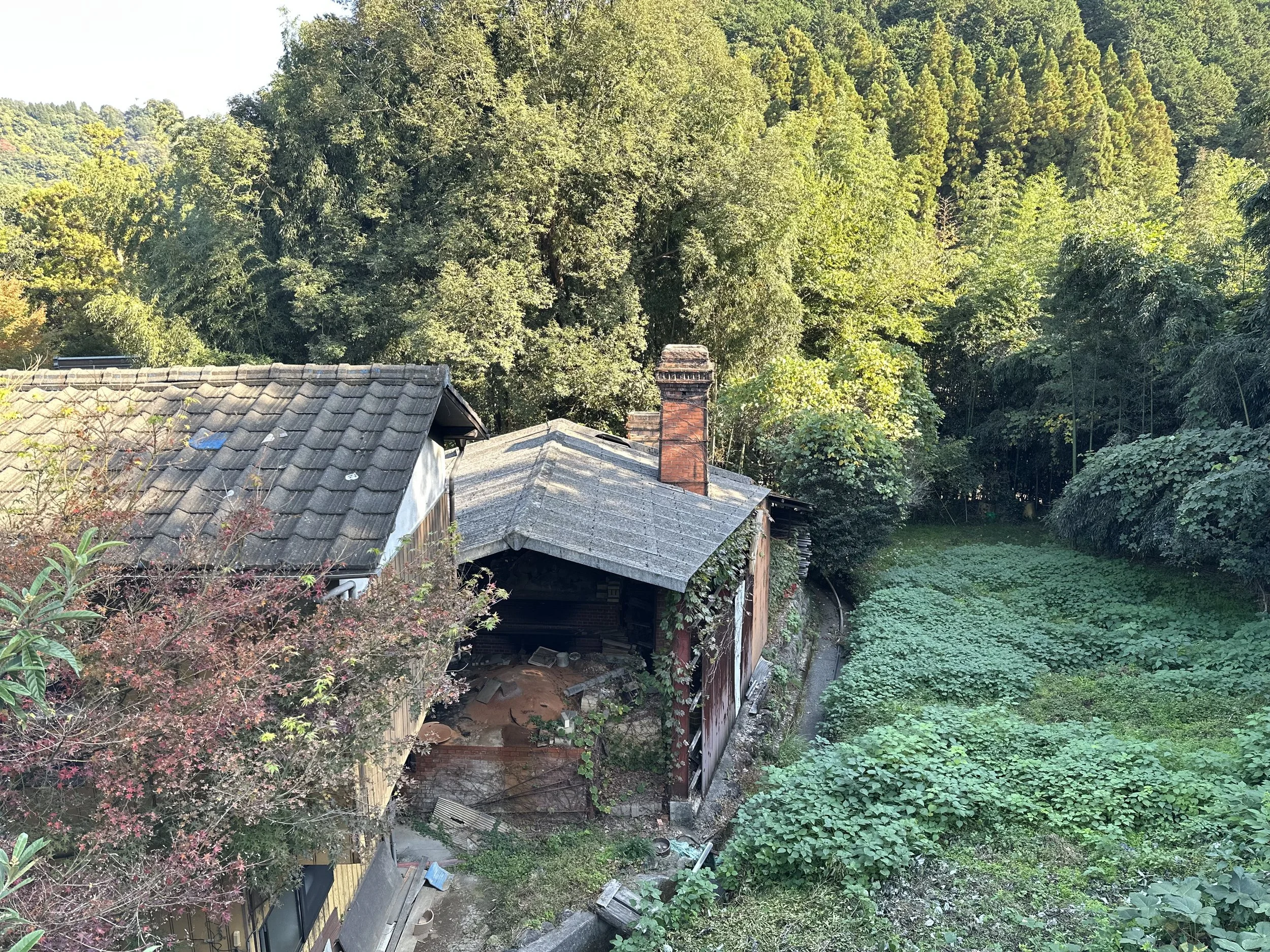
(His pottery workshop in the forest)
Mr. Tanaka’s pottery workshop is tucked away in the forest, surrounded by the quiet beauty of nature. Just behind the workshop sits a small local shrine, where he regularly stops to pray for the health and wellbeing of his family, friends, and customers. It is a simple part of his daily life, but one that reflects the warmth and care he has for the people around him.

(The traditional wood-fire kiln)
His traditional wood-fired kiln is surprisingly spacious, with enough room to fire up to 2,000 pieces at once. Mr. Tanaka works to a steady rhythm, spending around two months shaping and preparing his pottery before firing everything together roughly once every three months.
Before each firing, he also places osonaemono—traditional offerings for the spirits and ancestors—by the kiln. These may include sake, sacred wooden pieces, or dried fish, carrying a sense of respect and tradition into the firing process itself.
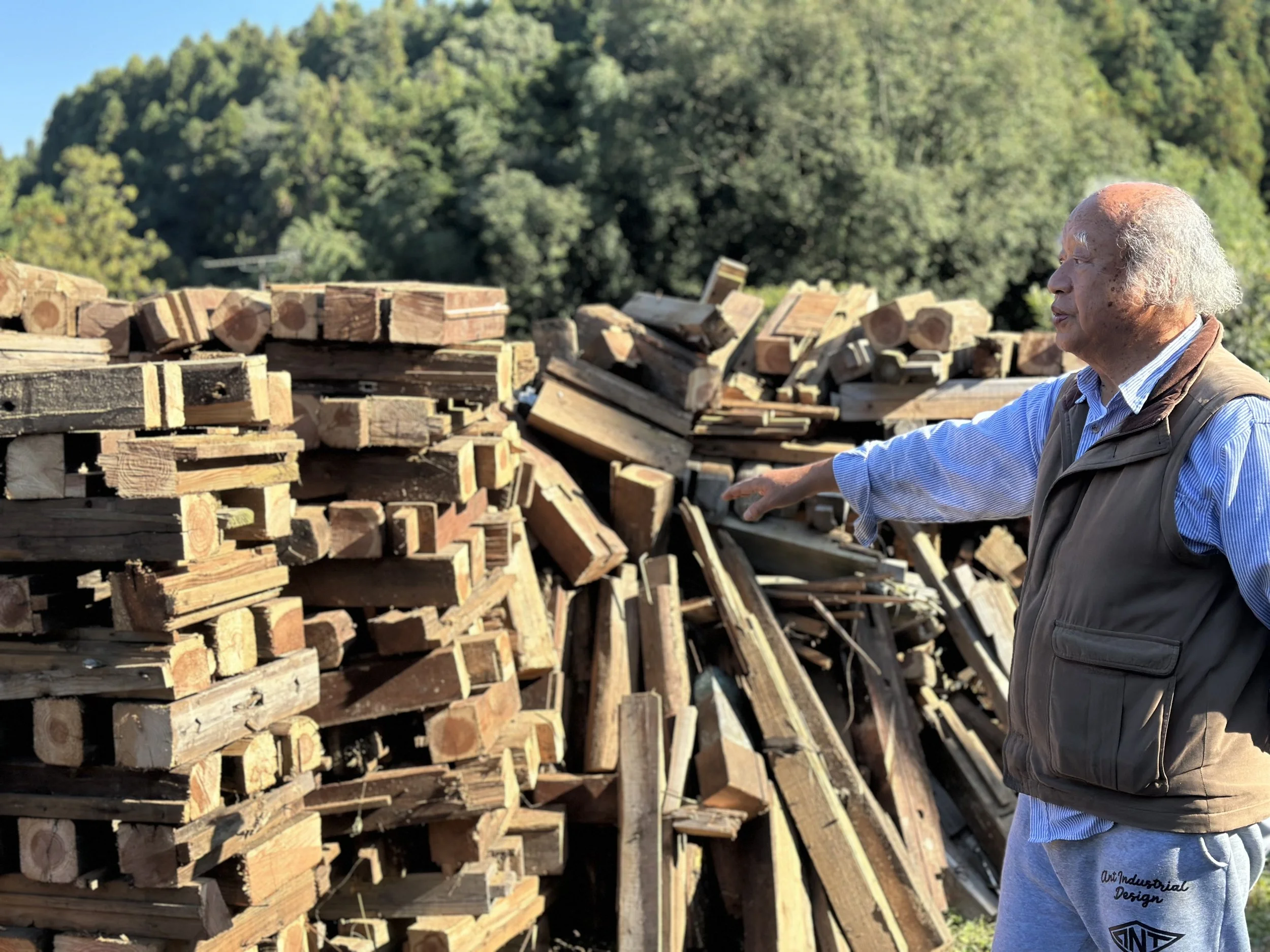
(Piles of firewoods and Mr.Tanaka)
Traditional Japanese houses were built with large amounts of timber, and today, many old homes in the countryside are being left empty as rural populations decline. When these abandoned houses are taken down, Mr. Tanaka receives some of the old timber from his carpenter friends and gives the wood another purpose by using it to fire his kiln.
Each firing requires an enormous amount of firewood, and it takes him around a full week just to cut the reclaimed timber into pieces small enough to fit the kiln.
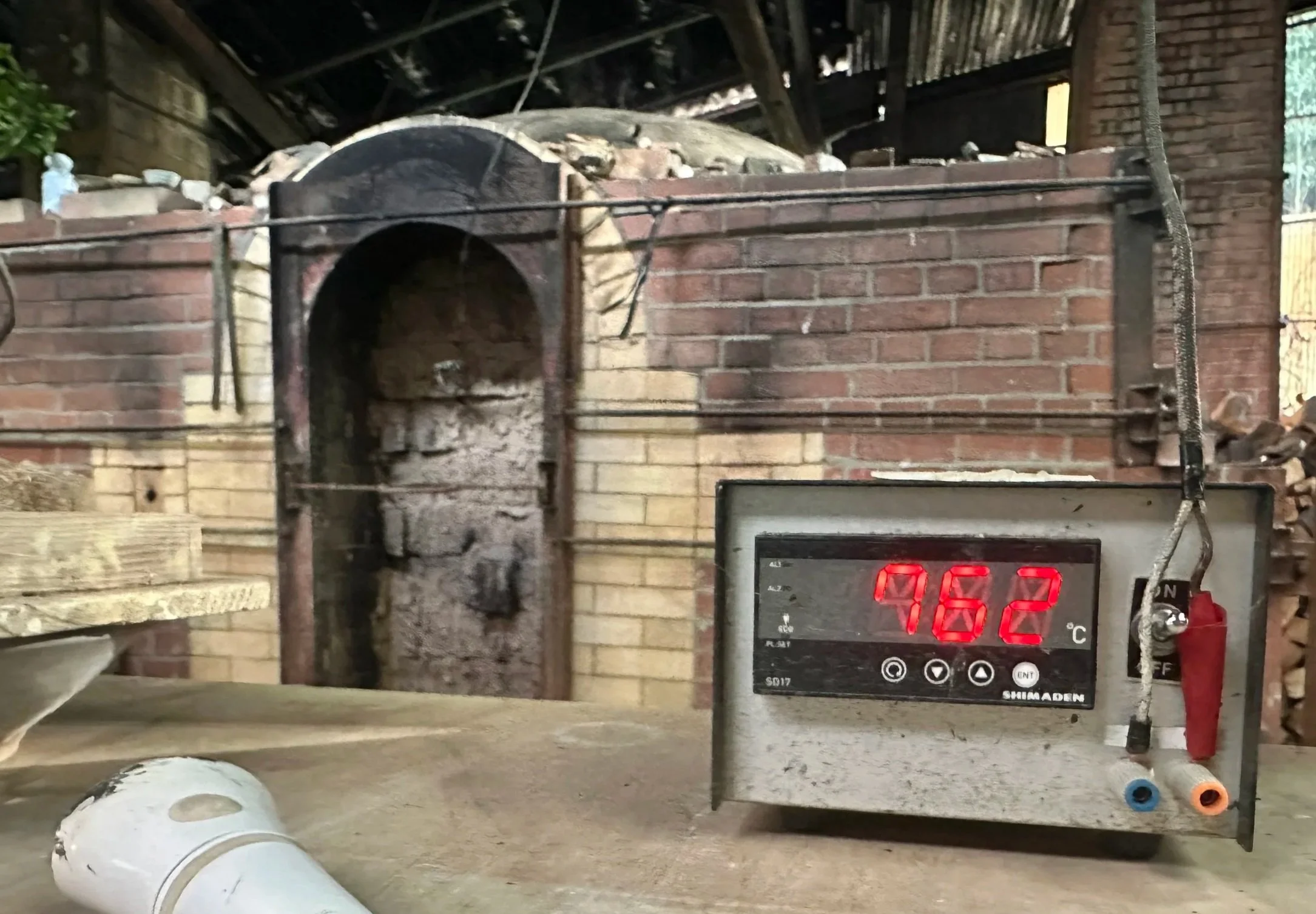
(The temperature checker in front of the kiln)
The firing itself is incredibly demanding. Depending on the weather and seasonal conditions, Mr. Tanaka stays awake for 24 to 36 hours straight, adding firewood to the kiln roughly every 10 minutes to carefully adjust the temperature until it reaches around 1,250°C. He lays a simple mat beside the kiln and takes only very short rests between tending the fire. On humid days, reaching the required temperature can take even longer. His workshop is semi-outdoors, which means doing all of this through the intense heat of Japanese summers and the freezing cold of winter.
At 77 years old, I honestly don’t know how he continues to do it—but his passion for his craft seems to keep him going.
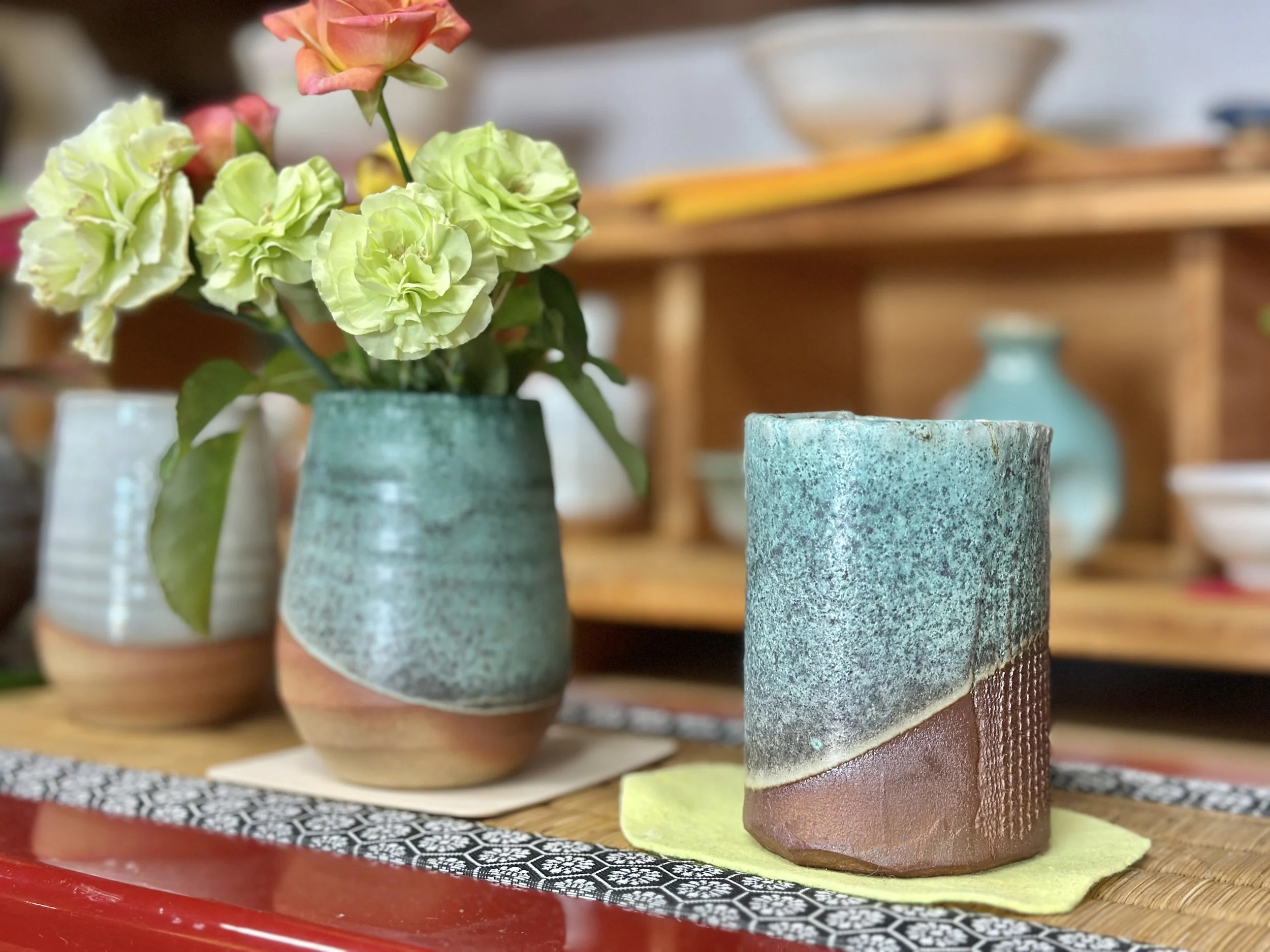
Mr. Tanaka’s passion lies deeply in wood-fired pottery. He says a wood-fired kiln can create colours and textures that a modern gas kiln simply cannot reproduce, and you can truly see this unique depth and character in his work.
While a gas kiln offers stable temperatures and precise control at the press of a button, a wood-fired kiln is influenced by the weather, temperature, humidity, and the ever-changing nature of the fire itself. He can never fully control how each piece will turn out—and for Mr. Tanaka, that unpredictability is exactly what makes wood-fired pottery so exciting.
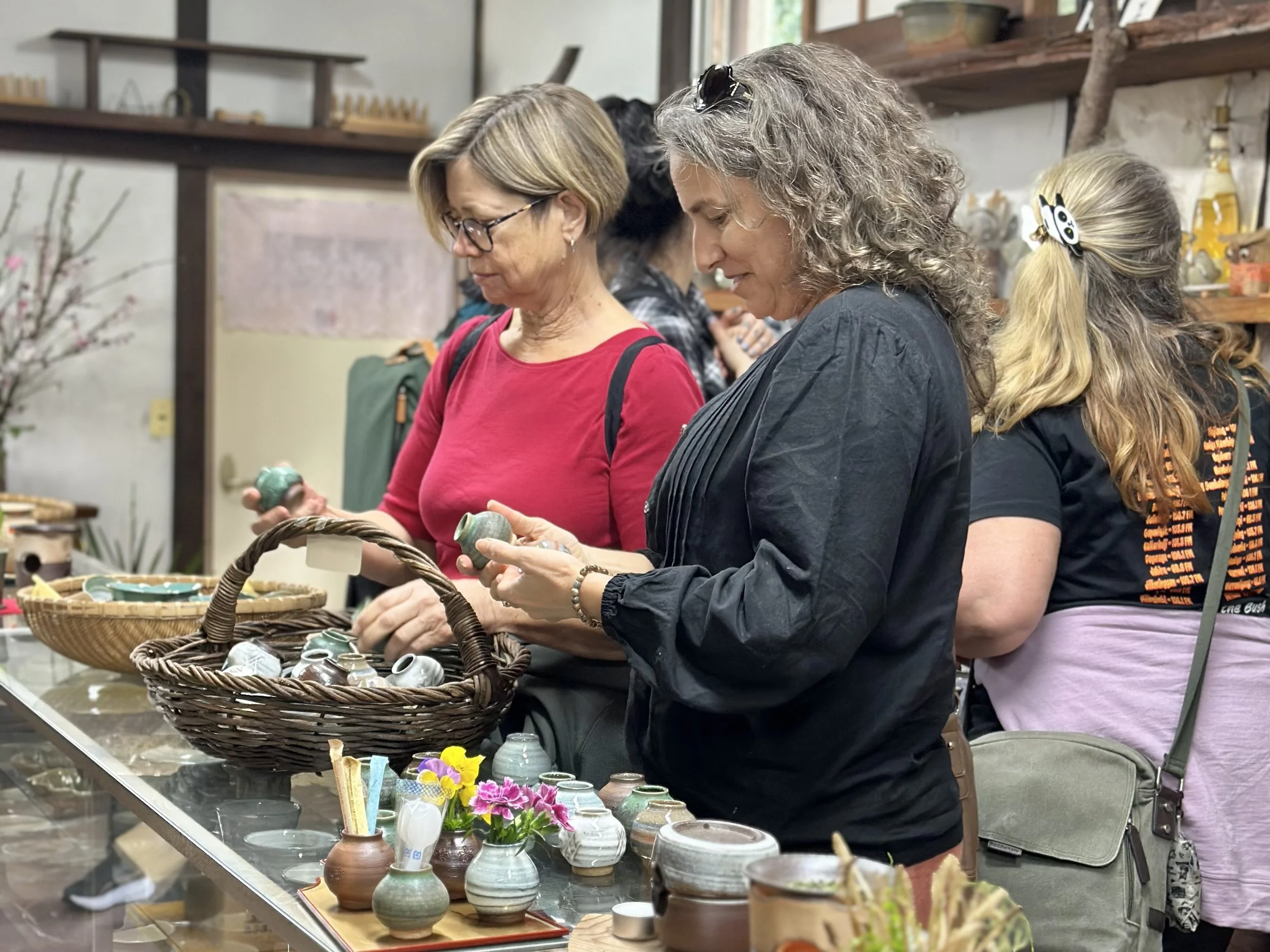
(Retreat guests visiting his shop)
Mr. Tanaka says there are two kinds of pottery: pottery created as art to be admired and displayed, and pottery made as a tool for everyday life. His work belongs firmly to the second.
Rather than having his pieces sit on a shelf, he wants people to use them every day—to drink their morning tea from his cups, serve meals in his bowls, and let his pottery naturally become part of their daily lives. This philosophy is also why he keeps his pieces surprisingly affordable, despite the tremendous amount of time, physical work, and craftsmanship that goes into making them.
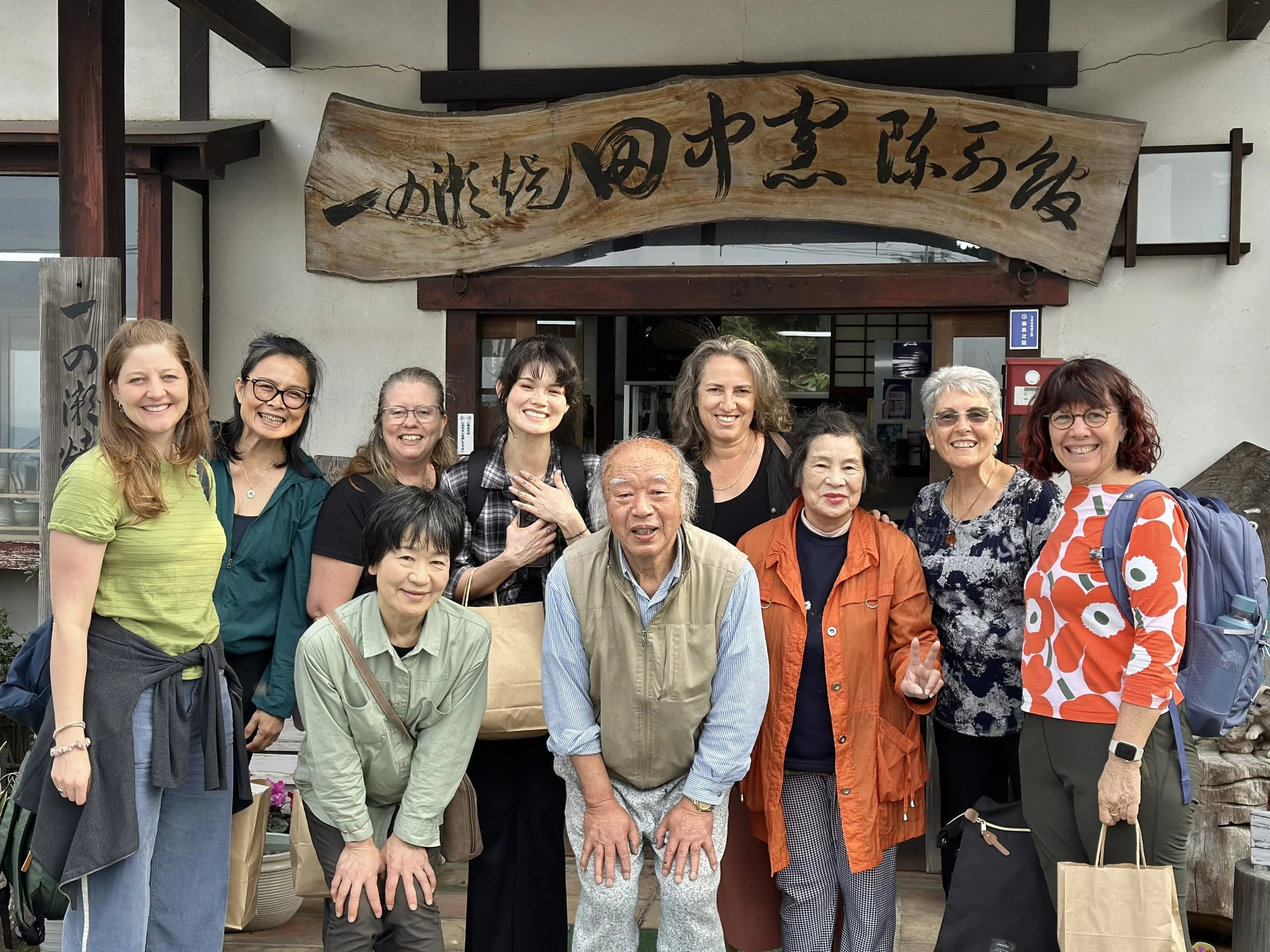
(Retreat guests with Mr.Tanaka)
Despite his incredible skill and decades of experience, Mr. Tanaka remains one of the most humble and generous people we know. Whenever we visit, he welcomes our guests with a table full of snacks, drinks, seasonal fruits, and of course, green tea served in his own handmade cups. His hospitality comes so naturally, and we always leave his workshop feeling touched by his warmth.
We are truly grateful for the privilege of visiting him during each retreat and sharing his story with our guests. I sincerely hope he can continue creating the pottery he loves, with the same passion and spirit, for many more years to come.
【Yoga & Culture Retreat Schedule】
🍁2026 Oct: FULLY BOOKED
🍁2026 Nov: FULLY BOOKED
🌸2027 Mar: 2 rooms left
🌸2027 Apr: FULLY BOOKED
🍂2027 Oct/Nov: Booking will open in the end of 2026.